

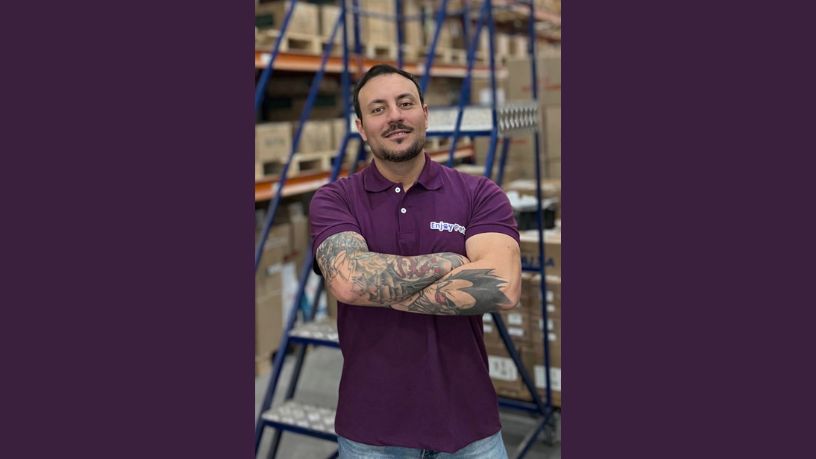
Hugo Galvao de Franca Filho, founder and director of Enjoy Pets, explains that a dog bed reaching a buyer in São Paulo within two days can take a week or more to reach a buyer in a smaller city in the North or Northeast, even when it ships from the same seller on the same day. He notes that the gap has less to do with straight-line distance and more to do with where the product physically sits before the order is even placed.
What actually determines delivery time
Two buyers can live the same number of kilometers from a seller’s warehouse and still get very different delivery estimates, because distance alone rarely decides the route a package takes. What matters more is whether the destination sits inside a carrier’s dense last-mile network or requires a handoff to a second regional carrier once the package leaves the main hub, which is common outside large metropolitan areas and does not always correlate cleanly with how far the buyer actually lives from the point of origin.
That handoff is where most of the extra days accumulate. Hugo Galvao indicates that each additional carrier in the chain adds its own sorting and dispatch schedule, and a product that would take two days within a single network can easily take five or six once it crosses into a region served by a different local operator, even when the total distance traveled is not dramatically greater.
How fulfillment programs change the equation
Marketplaces address part of this by offering fulfillment programs where sellers send stock ahead of time into the marketplace’s own network of regional warehouses, rather than shipping every order directly from a single location. A product already sitting in a warehouse closer to the buyer skips much of the handoff chain, which is how some listings qualify for next-day delivery badges even outside major capitals.
The tradeoff is that placing stock in these programs costs money regardless of whether every unit sells quickly, since storage and handling fees apply the moment the product enters the warehouse. For a small, low-margin accessory, that ongoing cost can outweigh the benefit of faster delivery in regions with fewer buyers and lower order volume overall.
What this looks like for a pet catalog specifically
Deciding which products belong in a fulfillment program becomes a weight and demand question rather than a blanket policy applied to the whole catalog. A bulky bag of food sold in steady volume across several regions can justify the storage cost of sitting closer to buyers, while a slow-moving accessory rarely earns back what it costs to hold in the same network.
At Enjoy Pets, Hugo Galvao applies that filter product by product, placing the heavier, higher-volume items into regional fulfillment ahead of time while leaving slower-moving accessories to ship directly, rather than treating fulfillment placement as an all-or-nothing decision for the entire catalog at once.
Why this affects more than delivery speed
A buyer outside the main metropolitan areas who sees a realistic, short delivery estimate is far more likely to complete a purchase than one facing a vague or lengthy one, regardless of how good the product itself is. Fixing that estimate is rarely about shipping faster in general and almost always about deciding, product by product, where stock should already be sitting before the order comes in, well before the buyer ever reaches the checkout page.
To Hugo Galvao de Franca Filho, treating delivery time as a placement decision rather than a shipping problem is what lets a pet store compete for buyers well outside the regions it originally built its logistics around.